
Read More

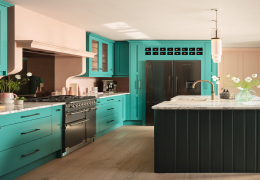
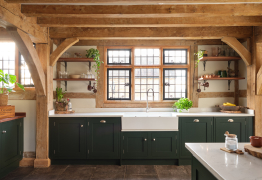
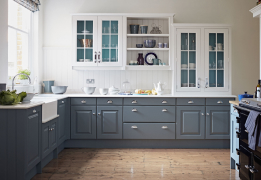
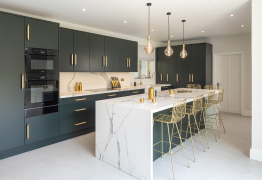
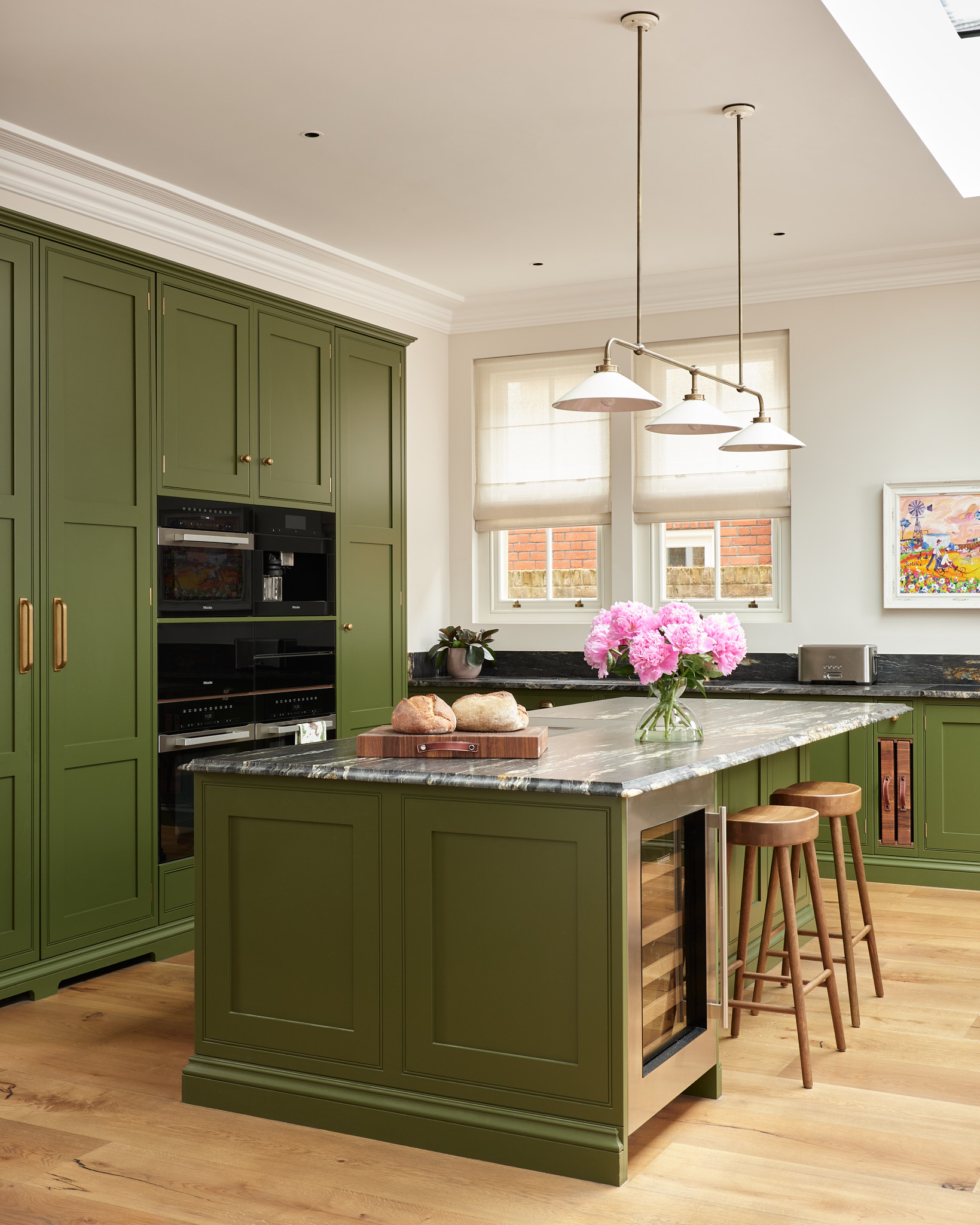
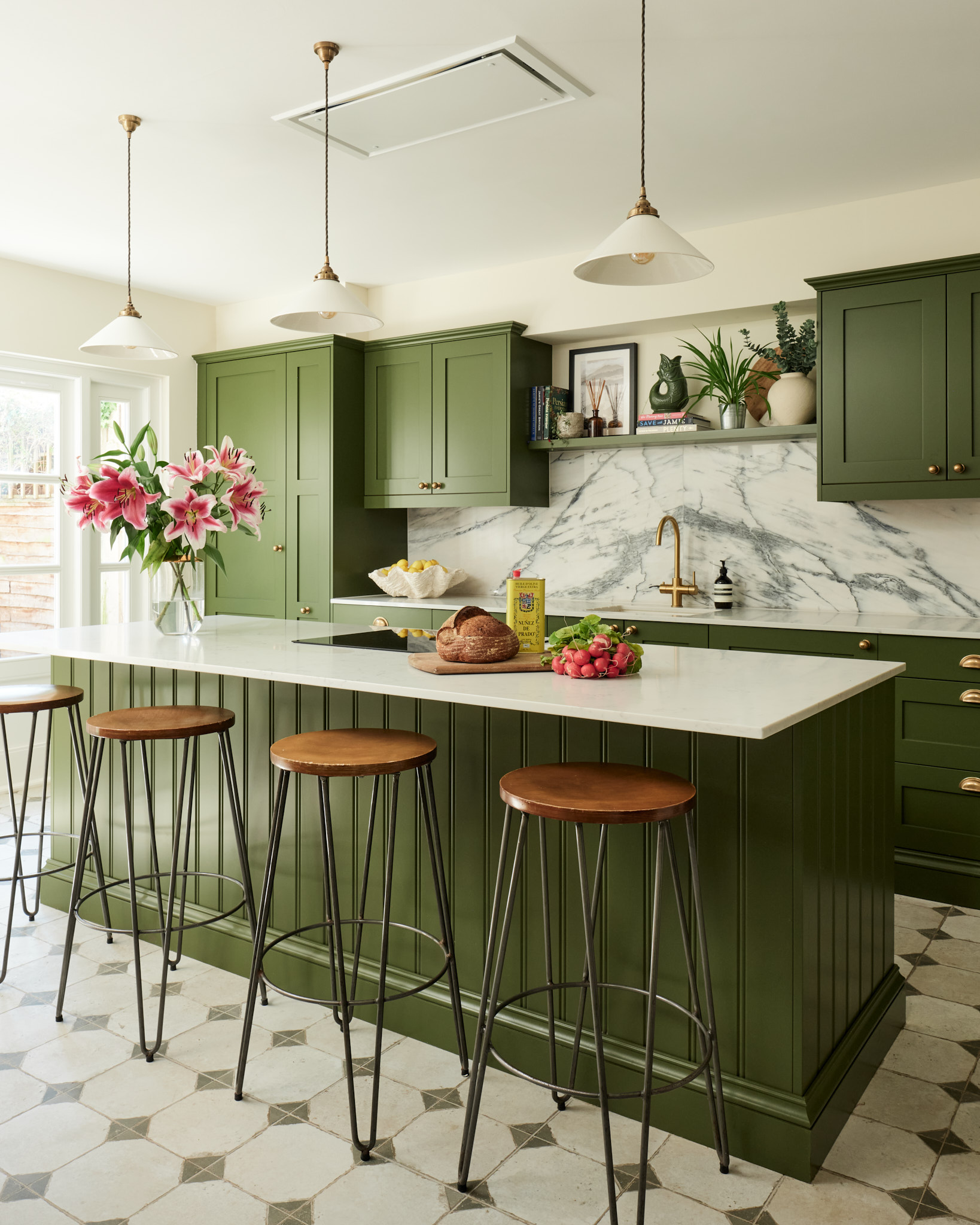
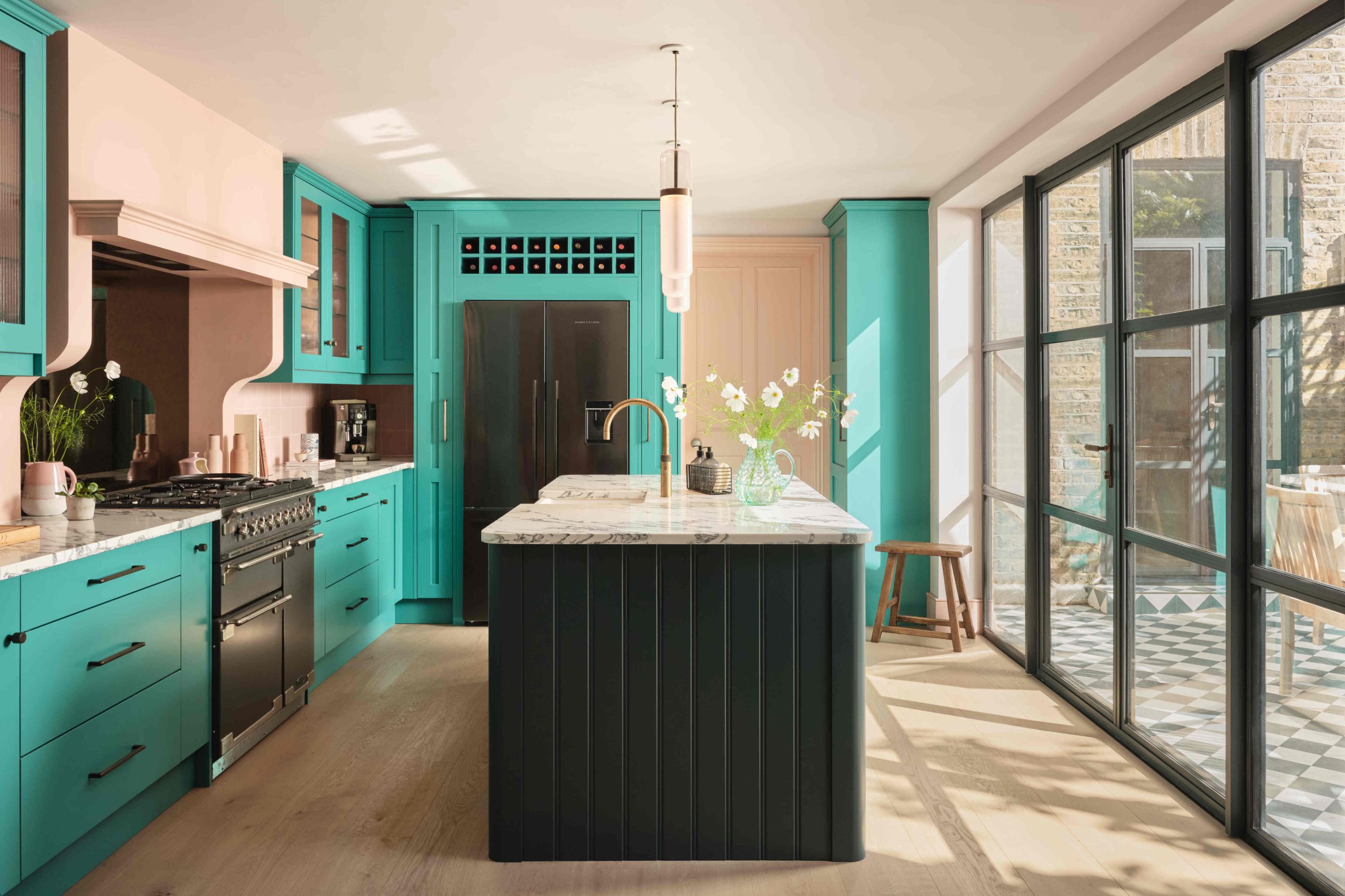
A kitchen island can be added to an existing kitchen or incorporated within a whole kitchen renovation.
When proportion and placement are carefully planned, it can strengthen the room and improve how the space functions, becoming a central working element within the kitchen, shaping circulation, storage and daily use. When poorly positioned, it can disrupt flow, reduce workspace and dominate the layout.
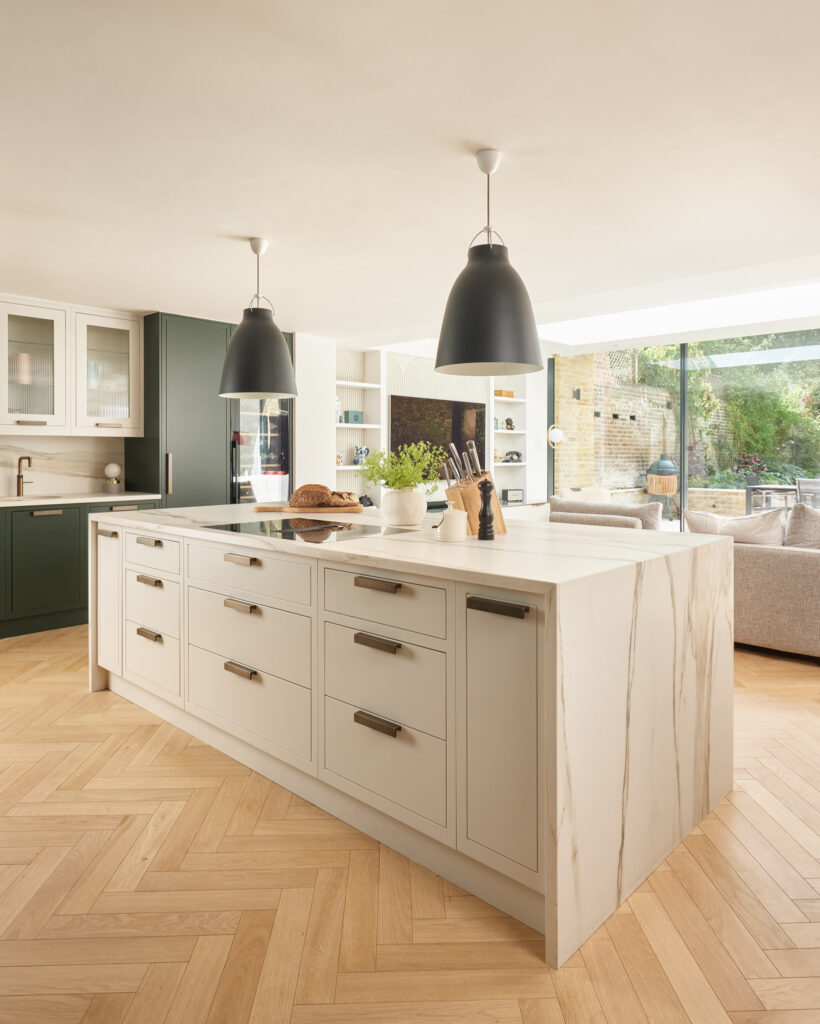
A bespoke kitchen island works best when the room has sufficient width to allow comfortable circulation on all sides. As a general guide, a minimum clearance of 90cm is required, though larger spaces benefit from more generous walkways.
In narrower layouts, a peninsula or extended worktop may provide similar functionality without interrupting movement.
Before introducing an island, the overall kitchen layout should be assessed, including appliance positioning, natural light, and the relationship to adjoining spaces.
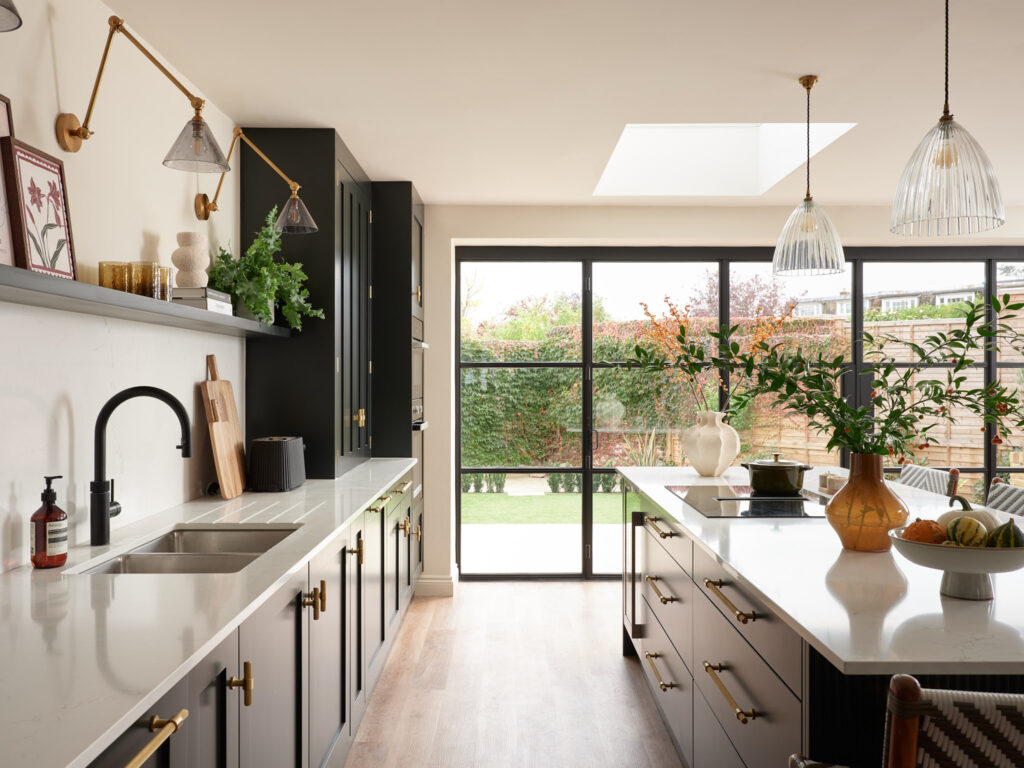
The size of a kitchen island should relate directly to the room.
A common mistake is having an island that is too large for the space, leaving tight walkways and reducing functionality. Equally, an island that is too small can feel temporary rather than integral.
Depth typically ranges between 90cm and 120cm, depending on whether seating or integrated appliances are included. Length should reflect the scale of surrounding cabinetry runs and architectural openings.
A well-proportioned island sits confidently within the room, rather than appearing added to it.
Kitchen island layout must support how the room is used.
Positioning should allow:
In open-plan kitchens, an island often helps organise the space, creating a natural division between cooking and living areas.
When aligned correctly, the island supports both workflow and visual balance.
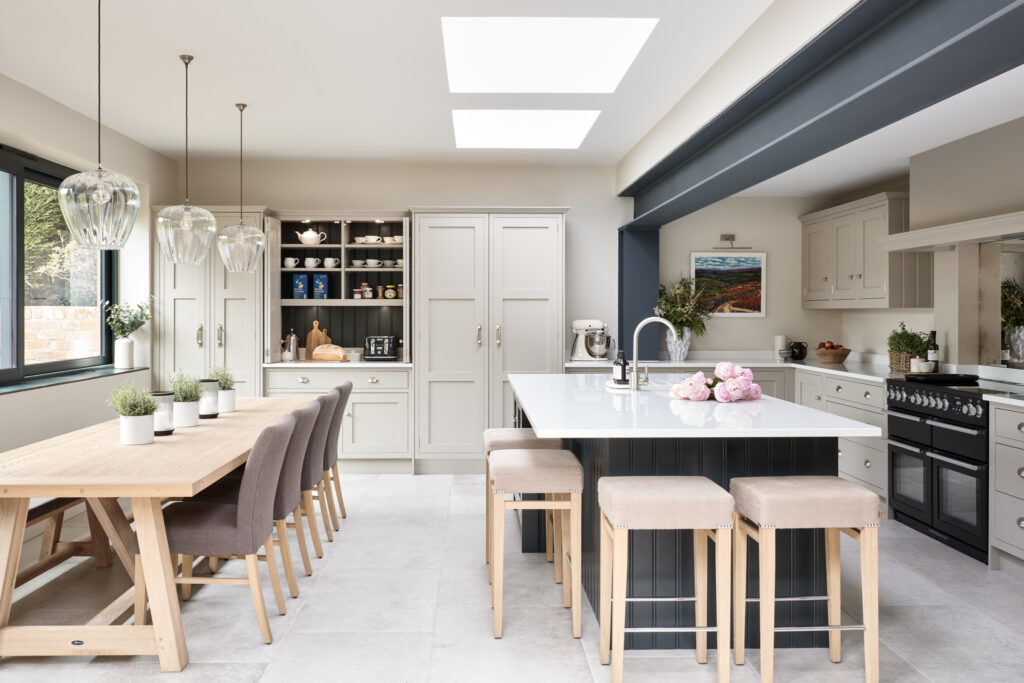
A kitchen island with sink, hob or wine cooler requires careful planning.
Plumbing, ventilation and power supply must be resolved early in the design process. Extracting from an island hob, for example, demands different technical considerations compared to a wall-mounted installation.
Appliances should sit flush within the cabinetry, maintaining a clean elevation when viewed from across the room.
Where possible, avoid overcrowding the island. Combining cooking, washing and seating within a compact footprint can compromise comfort and usability.
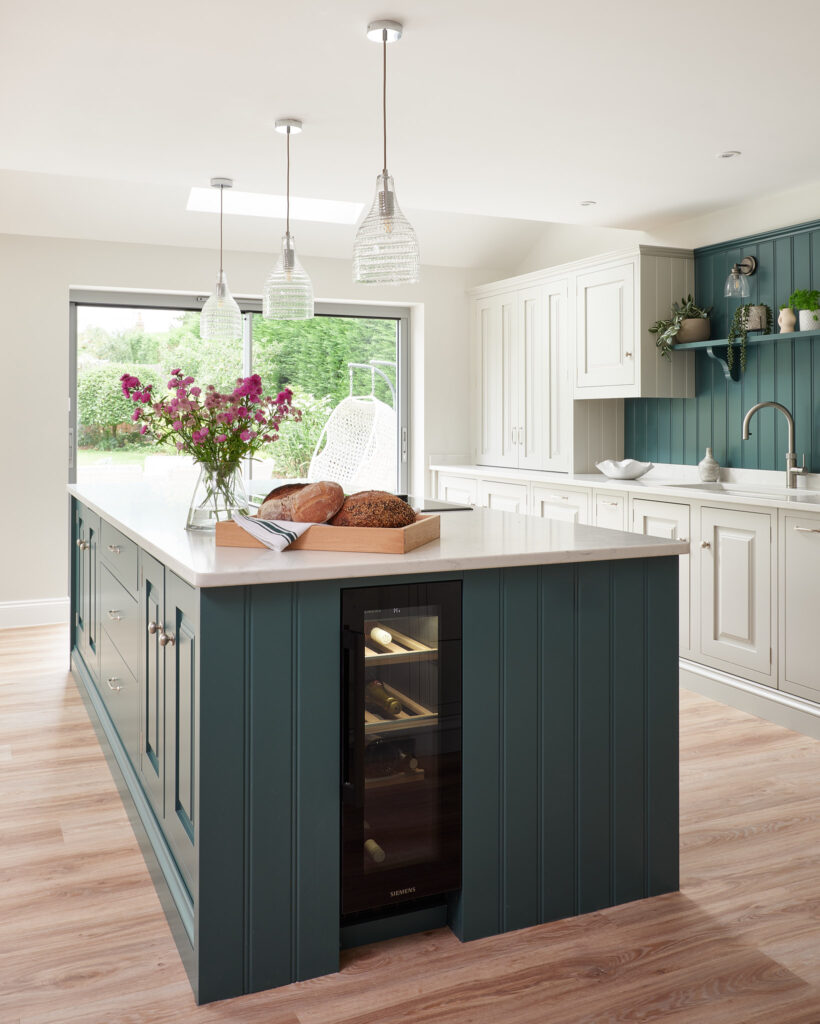
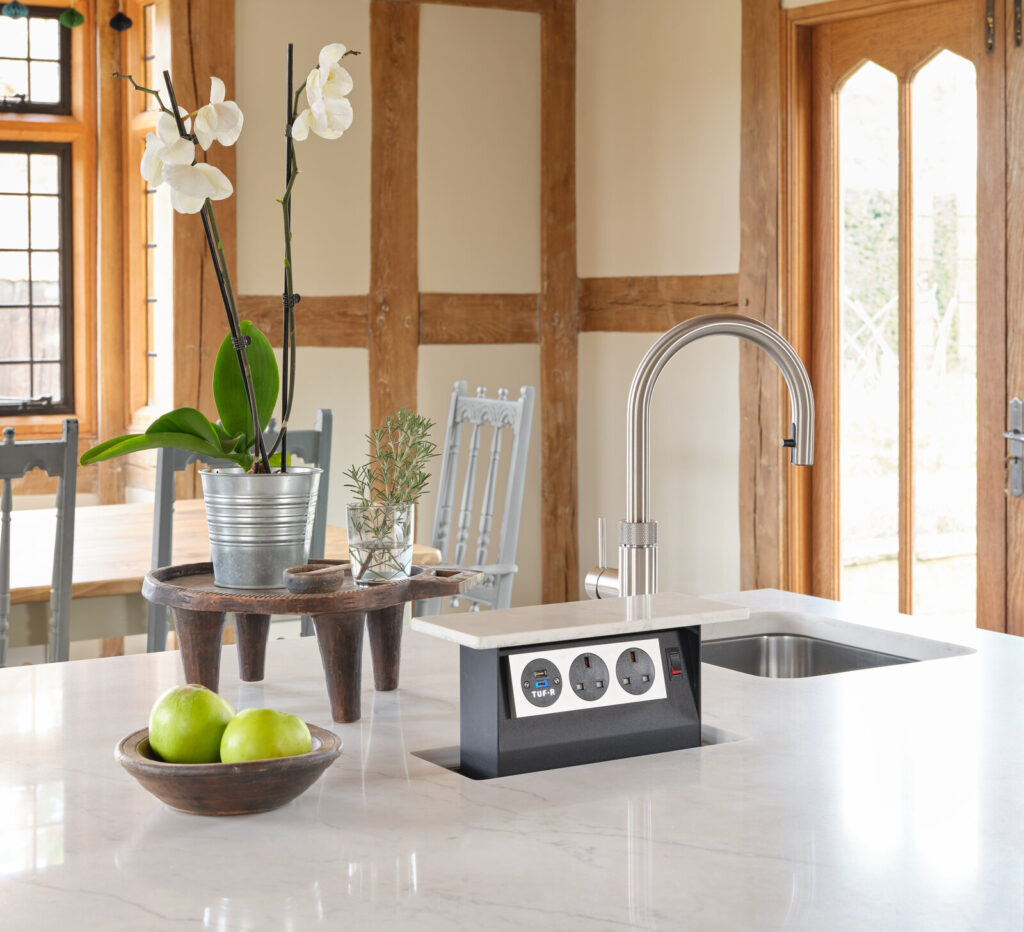
Electrical provision within a kitchen island should be planned early.
Preparation appliances, charging points and integrated appliances all require discreet access to power. Outlets can be incorporated within side panels, concealed drawers or flush pop-up fittings, depending on the design language of the kitchen.
Poorly positioned sockets quickly undermine an otherwise considered layout.
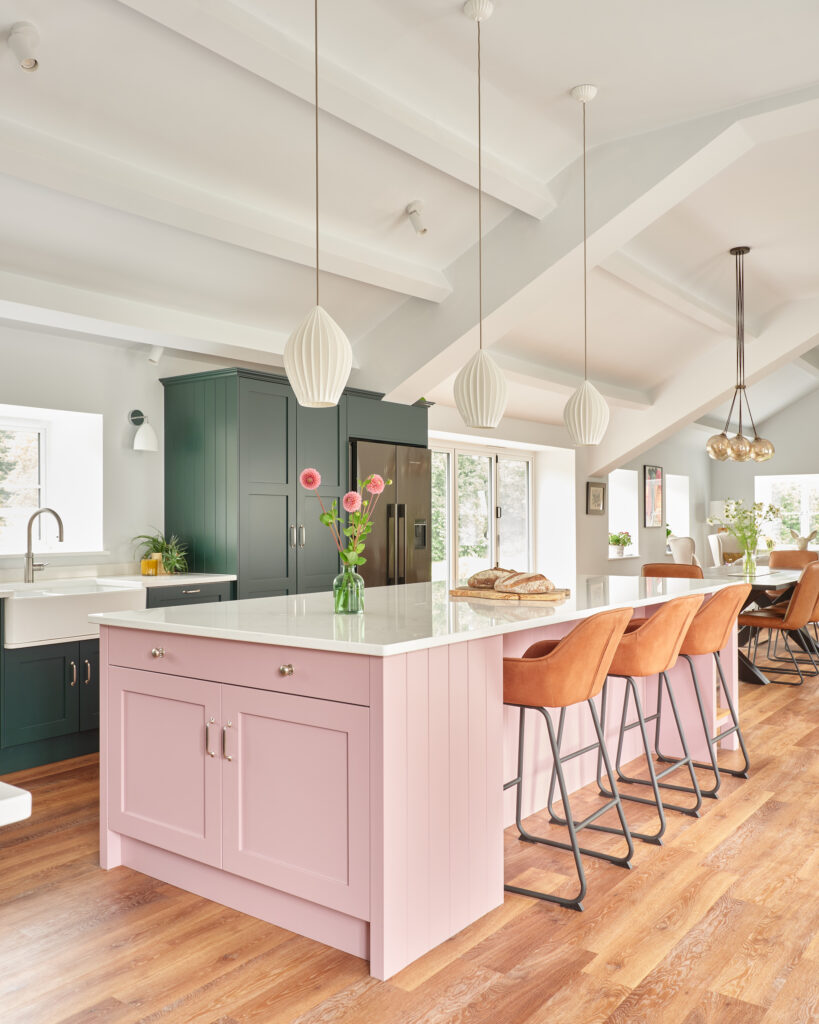
Kitchen island seating has become increasingly popular, particularly in open-plan homes.
To function properly, seating requires adequate overhang depth and legroom. The height of the worktop must correspond with stool dimensions, ensuring comfortable use.
When thoughtfully designed, a kitchen island with seating provides a practical space for informal dining without disrupting preparation areas.
In some layouts, extending the island to incorporate a lower table-height surface may offer greater flexibility.
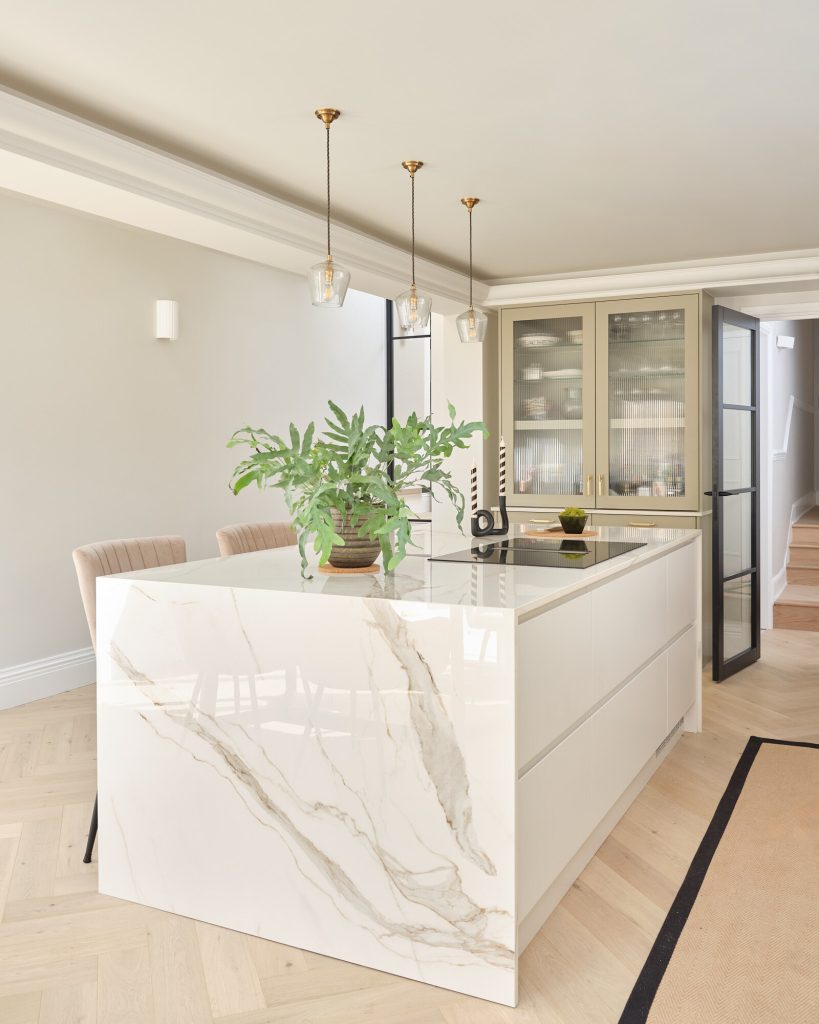
Material selection impacts both durability and aesthetics.
Timber introduces warmth and texture, while stone or quartz provides resilience and a more solid presence. Combining materials, for example, a painted base with a stone worktop can create contrast without overwhelming the room.
Edge profiles, finish sheen and colour depth all influence how substantial the island appears.
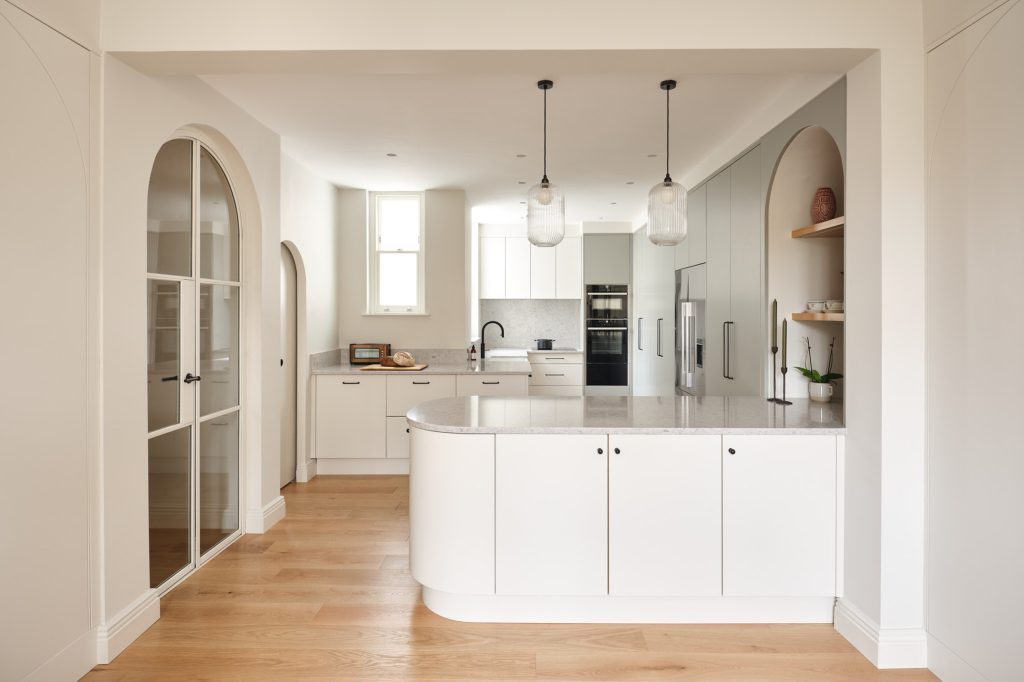
In compact kitchens, introducing an island can compromise movement and storage.
Where space is limited, alternative solutions such as peninsulas, extended cabinetry runs or bespoke freestanding tables may provide better results.
Because a peninsula connects to existing cabinetry, it can:
• Maintain uninterrupted walkway space
• Increase worktop area without requiring 90cm clearance on all sides
• Provide seating without isolating the preparation zone
In many layouts under 4 metres wide, a peninsula results in better long-term usability.
At John Lewis of Hungerford, kitchen islands are designed as integral components of the overall layout.
Proportion, flow, appliance integration and material selection are resolved before finishes are finalised. Whether creating a luxury kitchen island with seating or a compact preparation island, each design is tailored to suit the room and the client’s requirements.
If you are planning a new kitchen or renovation, we would be pleased to discuss how a bespoke kitchen island can enhance your layout.
Explore our collections by downloading our brochure or booking an appointment today. With over 50 years of expertise, we guarantee quality, craftsmanship and timeless design.
We value your privacy
We use cookies to enhance your browsing experience, serve personalized ads or content, and analyze our traffic. By clicking “Accept All”, you consent to our use of cookies.


